

oathbreaker (poem)
this loyalty is lethal.
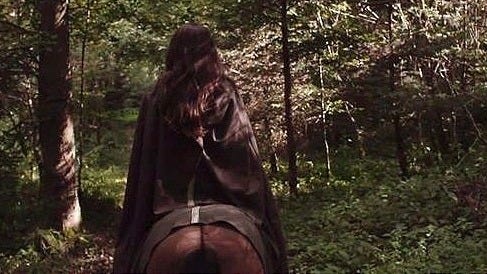
I’m back with the fourth poem in my series on Arthurian women. This week, we are taking a look at Enide from Erec and Enide by Chrétien de Troyes. This romance has several separate stories within it; however, I want to focus on one in particular. After Erec and Enide marry, Erec is accused of neglecting his knightly duties due to his all-consuming love for his new wife. Determined to prove himself, Erec sets out on a journey with Enide by his side. Erec, on several occasions, commands her to not speak to him unless he speaks to her first. She repeatedly neglects this command to warn him of upcoming dangers. Every time she speaks, she is scolded by Erec and warned to not do it again. The rest of the story includes more fighting, threatened marriage, a fake death, and a happy ending. By the end of the story are crowned king and queen in Nantes.
While Erec and Enide are madly in love by the end of the poem and Enide’s disobedience is forgiven, I wanted to explore the concept of a woman who, in the moment, is torn between the social construct of obeying her husband and breaking her promise to warn him of dangers up ahead. In the end, which does she choose? His (un)dying love or his life? I also aimed to keep this poem short and to the point as one might when they are speaking when giving an urgent warning.
oathbreaker
there is danger
in this dark wood.
a humming deep
in its roots tells me
blood is coming.
seen, only seen.
no utterance made
from a faithful wife.
this, i swore before
the gods and the grass.
but when weighing
the cost of
life over love
in the grooves of
my tongue
i know that
the teeth cannot
hold back the truth.
this loyalty is
lethal.
and, sometimes,
what is not said
is more treacherous
than what is.
Other poems in this series:



violent ends is a free publication! the best thing you can do to support my work is to share it with others and interact with it. if you want to show support in other ways you can also buy me a coffee.
"The teeth cannot hold back the truth."
That image is precise
because it locates the conflict
exactly where it lives —
not in the mind,
not in the heart,
but in the body's refusal
to cooperate with the oath.
She swore.
She means to keep it.
And then danger hums
in the roots of the dark wood
and something in her
speaks anyway —
not from disobedience
but from a loyalty
deeper than the promise.
The oath was to him.
The warning is also to him.
That is not betrayal.
That is the moment
when a woman discovers
that the vow she made
and the love she has
are not the same thing —
and that the love
will always win.
— AËLA